

Post
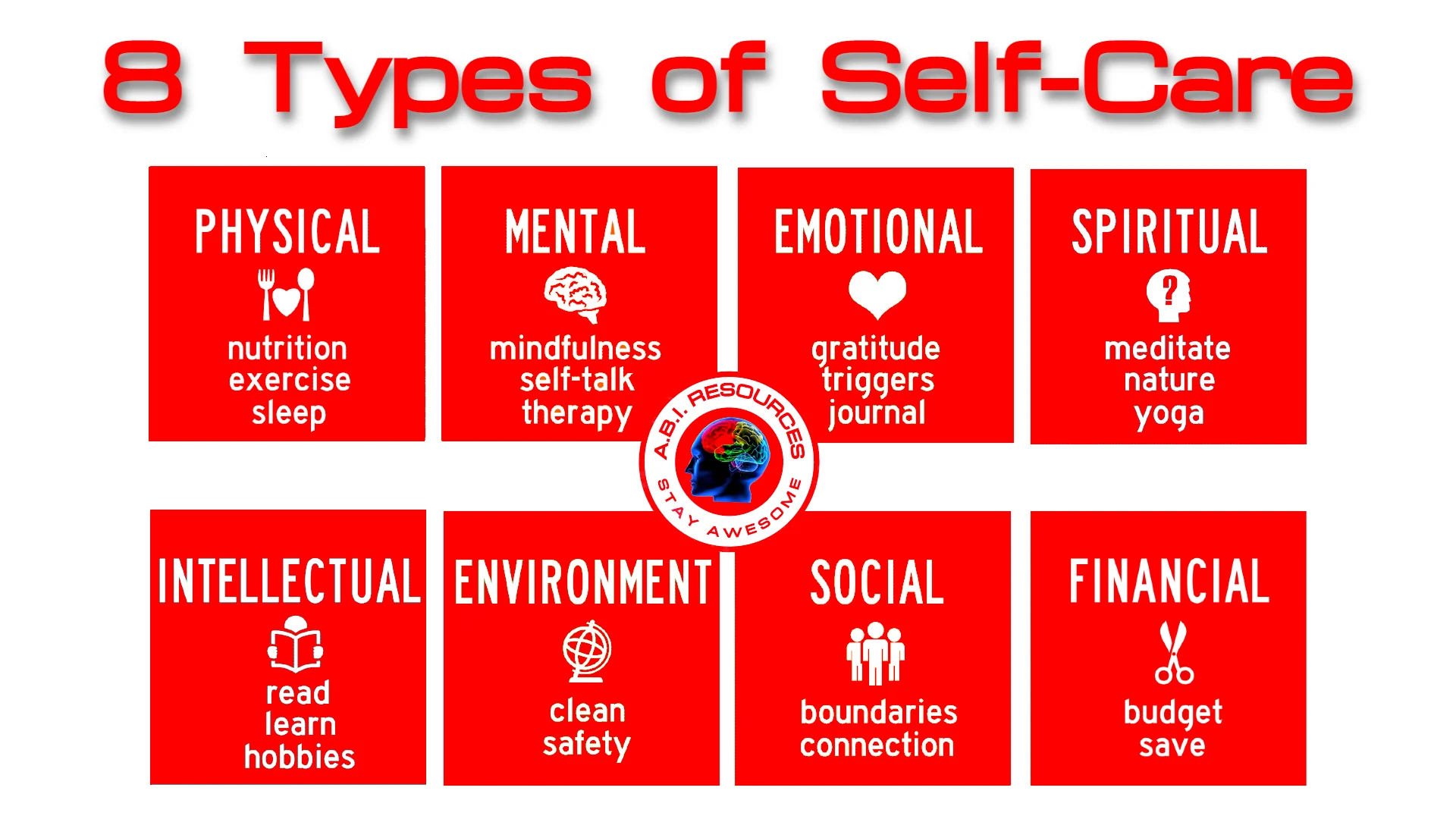
Self-care takes many forms and is a crucial piece of mental wellness. Checking your feelings during and after a self-…
Publication and verification boundary
Preserved public text
ABI Resources added a new photo.
Self-care takes many forms and is a crucial piece of mental wellness. Checking your feelings during and after a self-care activity can help you know what works well for you. Some activities are nourishing, depending on how you are feeling that day. Here are eight types of self-care and examples to consider: PHYSICAL SELF-CARE Self-care has to do with feeling physically well and maintaining physical health. • Sleep or rest • Stretching, walking, or exercise that feels good • Keeping medical appointments • Healthy food • Fresh air EMOTIONAL SELF-CARE Self-care involves attending to your emotions, finding empathy and self-compassion, and seeking help when needed. • Journal or talk it out • Stress management • Listen to or make music/art • Self-compassion • Counseling SOCIAL SELF-CARE Self-care has to do with a healthy family and social relationships. • Time with others (in person or virtually) • Healthy Boundaries • Balancing alone time and social time (or small groups and large groups) • Positive social media • Asking for help SPIRITUAL SELF-CARE Self-care has to do with religious beliefs or spirituality. • Connection • Prayer or meditation • Reflection • Attending worship services or groups (if applicable) • Nature PERSONAL SELF-CARE Self-care has to do with knowing and honoring yourself and what you enjoy. • Listening to yourself (getting out of autopilot) • Hobbies • Treating yourself • Trying something new • Getting to know yourself HOME ENVIRONMENT SELF-CARE Self-care involves maintaining a safe, functional, and comfortable home environment. • Safety • Security and stability • Cleaning and organizing (whatever that means for you) • Comfy space • Healthy living environment FINANCIAL SELF-CARE Self-care has to do with maintaining your financial goals and obligations. • Money management and budgeting • Saving • Seeking help or information • “Fun” money • Paying bills WORK, SCHOOL, CAREGIVING, OR OTHER RESPONSIBILITIES Self-care has to do with attending to your needs in the realms of work, school, caregiving, or other responsibilities. • Time management • Feeling productive and valued • Learning and developing skills (and seeking help when needed) • Healthy work boundaries and communication • Break time Brain Injury TBI CT MFP ABI Waiver Connecticut home-based supported living and community care. ABI Resources supports terrific people and families alongside DSS and DMHAS. https://www.ctbraininjury.com/teaching-self-care
Photos
Associated photographs
Provenance and integrity
- Permanent record ID
- Source package identity
- Source record SHA-256
- Hashed source-file relationship