

Photograph record
( GREAT BOOKS ) IDEAS - RECOVERY DEVICES — 2018-03-02 07724b98
Publication and verification boundary
Preserved public text
( GREAT BOOKS ) IDEAS - RECOVERY DEVICES
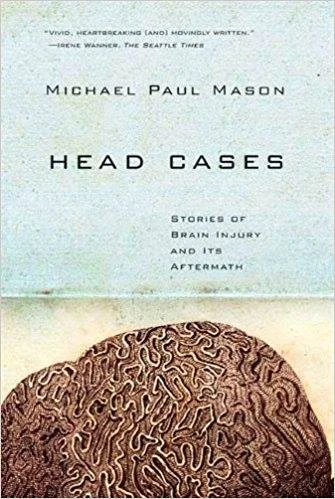
http://amzn.to/2GZ3cpC Head Cases: Stories of Brain Injury and Its Aftermath From Publishers Weekly Starred Review. Traumatic brain injury (TBI) has been brought to the fore by the war in Iraq, but not only soldiers experience it. Mason, a case manager in Tulsa, Okla., for people living with TBI, writes with passion and urgency about the unheralded but compelling stories of Americans injured in car accidents or through a miscalculation while snowboarding. Their lives are disrupted by seizures, memory loss, psychosis. One of Mason's clients is an ambitious former air force officer who now goes into waking trances in which he thinks he's dead, as a result of a herpes virus emerging from its hiding place to invade his brain. Mason lays out a damning indictment of the health-care system's failure to provide facilities and services that millions like his clients need. He also tells stories of tremendous courage and perseverance as survivors and their families work to re-establish the everyday skills they had before their injury. The strange effects of neurological damage will draw fans of Oliver Sacks, but Mason's poignant and caring accounts of his clients' lives are sure to touch the hearts of a wide range of readers. (Apr.) Copyright © Reed Business Information, a division of Reed Elsevier Inc. All rights reserved. From Booklist Tulsa-based brain-injury case manager Mason presents the stories of a dozen clients who have suffered traumatic brain injury (TBI) with startling candor not just about how their lives and those of their families were altered by the disability but about the scant assistance available on a national scale for TBI victims. The book’s publicity claims readers will come away “astonished at the fragility of the brain.” But who doesn’t already know that? On the other hand, many don’t know that TBI can be caused from either without (an auto accident, a fall) or within (a tumor or even a common virus that many endure with minor symptoms yet that can travel to the brain), changing a life literally in an instant. Additionally, most don’t know how to differentiate between behaviors caused by TBI and those caused by psychosis. Cast against a backdrop of slim resources crying for more aid, the stories are heartbreakingly stark, like so many slaps upside the head, but, coming from a man who too often must deliver bad news, hard to counterpunch. --Donna Chavez Review “Powerfully written . . . Head Cases sounds an alarm bell for our healthcare system.” —Oliver Sacks “Mason deftly conveys the frustrations and inequities of traumatic brain injury . . . [He] performs a valuable service by calling attention to the plight of the brain injured . . . I had come to think of neurological dysfunction as an almost fanciful affliction, its victims like characters in a work of magical realism. Mason has provided a needed, and sobering, account of reality.” —Mary Roach, The New York Times Book Review “One of my recent favorites . . . A sensitive and intelligent work.” —Jonah Lehrer, author of Proust Was a Neuroscientist “Vivid, heartbreaking [and] movingly written.” —Irene Wanner, The Seattle Times About the Author MICHAEL MASON (born 1971) is a brain injury case manager based in Tulsa, Oklahoma. Excerpt. © Reprinted by permission. All rights reserved. Introduction The first thing I tell her is that I cannot help. Her son Jake is thirty-four, my age. His gray, bruise-flecked limbs are splayed out on a bed before me; his mouth is dry and agape. I know I cannot help him. I cannot file a lawsuit against the insurance company, I cannot conjure a way out of this dead-end nursing home, and I cannot sucker punch the aloof neurologist or throttle the ignorant psychiatrist. I hold no sway over the waiting list in my own hospital. I explain to her that I can do nothing at all, and she sighs. She is desperate to see Jake in a program where there is a sense of progress and direction. She knows that the rehabs and specialty hospitals are as inaccessible as the moon. She has called them herself, and she knows that nobody can help. She knows I cannot help, but she asks me anyway. She asks, in all earnestness, to do the impossible and find her son a bed, and in my weakness, I agree. It’s my job to agree. Jake turns his head toward me and I suspect he can hear me. If he can respond, no matter how minimally, then he meets the most important criteria. He closes and opens his mouth arbitrarily, but not a sound comes out. I ask him to lift his head and I wait. Nothing. His mother is quiet and nearly in tears. I ask her to turn off the fluorescent lights and shut the door, and when she does Jake exhales faintly. It sounds like relief, like the hint of a response. I ask Jake once more to lift his head. A good fifteen seconds later, his head slowly raises an inch off the pillow, and then drops back down. That’s criteria enough for me. His mother grins at me proudly, as though her son just won a marathon. In a sense, he has. The next two hours find me thumbing through a thick notebook of Jake’s medical records, trying to decipher the scribbled progress notes and lab reports, then interviewing nurses and aides and doctors. I spend the last half hour of my evaluation explaining to Jake’s mother that this will take months at a minimum, but most likely a year or two—if anything happens at all. She will be my best resource through all of this, I tell her, as I hand her a list of administrators to call and a few forms to fill out. She tells me she will do this and anything else I ask, but she doesn’t need to say a word. If she’s been through this much already, paperwork and phone calls aren’t going to stop her. Before I leave, she asks for my business card, not because she doesn’t already have my number, but because she wants to know my title, she wants to know what kind of person drops everything to go to look at a bedridden man four hundred miles away. I hand her my card and tell her I am a brain injury case manager, and there is the hint of a smirk because we both know that brain injuries cannot be managed any more than a thunderstorm can be managed. They can be endured, accepted, and integrated, but not managed. She clasps her hands around mine, and I say goodbye, and I get back in my car. I am forever back in my car. I turn the ignition and hope for home, so I can lie down next to my wife and rest my hand on the warm crest below her navel. The hope is false; a singular voice mail from my director asks me if I can drive two hours north to Sioux Falls to assess a woman with brain damage due to a viral infection. Either I drive the two hours today, or I drive back home to Tulsa and drive ten hours up to South Dakota on Monday. I head north and can already hear the disappointment in Christy’s voice. When I call her from a filling station outside of Omaha, she doesn’t answer and I leave her a message. My marriage unfolds in messages. On my way up to Sioux Falls, I think about Jake still lying there in the nursing home, and how he has been lying there throughout the past year while I was buying a house and mowing the lawn and attending parties and traveling. He has been lying there long enough for his wife to have given up hope and file for divorce, and he hasn’t seen his son in months. Jake is trapped in an awful sense of nowhere, and yet he is still present, still responding, still human. I may not be able to help, but I can act. I can act for Jake, which, right now, is more than he can do for himself. I don’t look for cases; the cases find me. They catch me in airport terminals and waiting rooms, they crowd my inbox and voice mail. A single phone call can send me to Wyoming one day and Indiana the next. During a tough week, I might wind up in a dozen different cities. When I first started traveling, I would forget what city I was in when I woke up, so I would leave a phone book by the nightstand to orient me in the morning. I still forget the city I’m in, but now I leave the phone book in the drawer. The city comes to me sooner or later. Where I am at doesn’t matter so much; it’s the catastrophe that sets me in motion. Medicine reserves the term catastrophic for a handful of conditions, and the term fits. Spinal cord injuries sever and parse a person’s ability to move and control their limbs and basic body functions. Amputations disintegrate any hope of feeling and sensation. Full-body burns inflict a fierce pain only pharmaceutical amnesiacs can forgive. But chief among the catastrophic conditions is the traumatic brain injury, commonly called TBI. It is an upheaval of physical, psychological, social, and spiritual proportions. The wry eighteenth-century haikuist Issa wrote, “In this world / We walk on the roof of hell / Gazing at the flowers.” Those familiar with brain injury are familiar with Issa, if not by name, then in sentiment. Spend an hour in a room with someone who struggles to maintain eye contact with you and whose limbs are flailing as a result of a simple fall from a ladder, and soon enough a sense of your own vulnerability finds your legs less steady, your mouth a little dry, and your hand slow and cautious. Traumatic brain injury strikes with the concussive ferocity of a bomb; woe to those near its epicenter. A tap on the head, and anything can go wrong. Anything usually does go wrong. You may not remember how to swallow. Or you may look at food and perspire instead of salivate and salivate when you hear your favorite song. You may not know your name, or you may think you’re someone different every hour. Everyone you know and will ever know could become a stranger, including the face in the mirror. When you tell someone you’re sad, you may shriek; your entire vocabulary may consist only of groans or hiccups. A brain injury can shatter your notions of the future, splinter your past, and send your sense of time whirling in any number of directions. And that’s just the beginning. A brain injury is never an isolated incident; it affects nearly everything associated with the survivor. It can collapse a family and flatten a business, evaporate friendships and allegiances, overburden a community, and buckle a state’s healthcare system. Thanks to antiquated legislation and massive cutbacks, few states are capable of providing even the most minimal level of specialized care for brain injury patients, forcing most survivors to find treatment hundreds of miles from home, if they can find it at all. Brain injury is a quiet crisis; the numbers are almost too large to make sense. As many as 5.3 million Americans are living with a permanent disability resulting from a brain injury, a full 2 percent of the population. The Centers for Disease Control and Prevention reports that 1.4 million Americans sustain a brain injury each year, and that fifty thousand people die from that injury. Almost a quarter-million people are hospitalized; the remaining number are treated and released from the emergency room. Some of the released go home comforted, only to discover that they no longer have a sense of smell or taste, or that their sleeping habits have changed, or that they can’t seem to do their job anymore. There are more undiscovered head injuries in this world than are dreamt of in our medical journals. Only now are we beginning to understand something about the number of known brain injuries. Reframed, the numbers nauseate. In America alone, so many people become permanently disabled from a brain injury that each decade they could fill a city the size of Detroit. Seven of these cities are filled already. A third of their citizens are under fourteen years of age. Currently, there are at least ninety thousand Americans with a brain injury so severe that it requires an extended stay in a post-acute brain injury rehab, but there are only a few thousand specialty beds, and upwards of 90 percent of them are already occupied. The severely brain injured are not getting the treatment they need—they’re getting mistreated through neglect, misplacement, and isolation. Numbers, however, are not lying in hospital beds, nor are they languishing in mental health asylums and prisons. A brain injury has a way of exposing humanity at its most vulnerable, fragile, and determined. Because the brain is composed of a million billion synaptic connections, each injury to the brain is as unique and complex as the life it affects. No matter how much detail a person’s medical records indicate about their injury, the record is only a shadow, a small hint, at the human behind the injury. In the leveling world of TBIs, soccer moms grow heroic as soldiers, drug addicts transcend to the holy, the holy lose hope, and great egos give way. The sequence of events goes something like this: the brain gets damaged, and two months later, the million-dollar insurance policy is depleted and the patient is shuffled out the door with a shrug of shoulders. A course of treatment that should have lasted years is cut short before it even starts. Bereft, the family starts mining libraries and...Disclaimer: While we work to ensure that product information is correct, on occasion manufacturers may alter their ingredient lists. Actual product packaging and materials may contain more and/or different information than that shown on our Web site. We recommend that you do not solely rely on the information presented and that you always read labels, warnings, and directions before using or consuming a product. For additional information about a product, please contact the manufacturer. Content on this site is for reference purposes and is not intended to substitute for advice given by a physician, pharmacist, or other licensed health-care professional. You should not use this information as self-diagnosis or for treating a health problem or disease. Contact your health-care provider immediately if you suspect that you have a medical problem. Information and statements regarding dietary supplements have not been evaluated by the Food and Drug Administration and are not intended to diagnose, treat, cure, or prevent any disease or health condition. A.B.I. Resources assumes no liability for inaccuracies or misstatements about products. #tbi #abi #brain #Injury #rehabilitation #recovery #ilst #Connecticut ABI WAIVER PROGRAM #medicaid #medicare #disability #Recovery #Support #home #community #love #professionalism #caregiver #Network #Support #brainINJURY #Physical #Occupational #Therapy #rehab #PCA #ILST #abiresources #besT #Direct #Care #Specialist YOU DESERVE THE BEST!
Associated photographs
Provenance and integrity
- Permanent record ID
- Source package identity
- Source record SHA-256
- Hashed source-file relationship